Using Personality Typology in Work and Personal Life
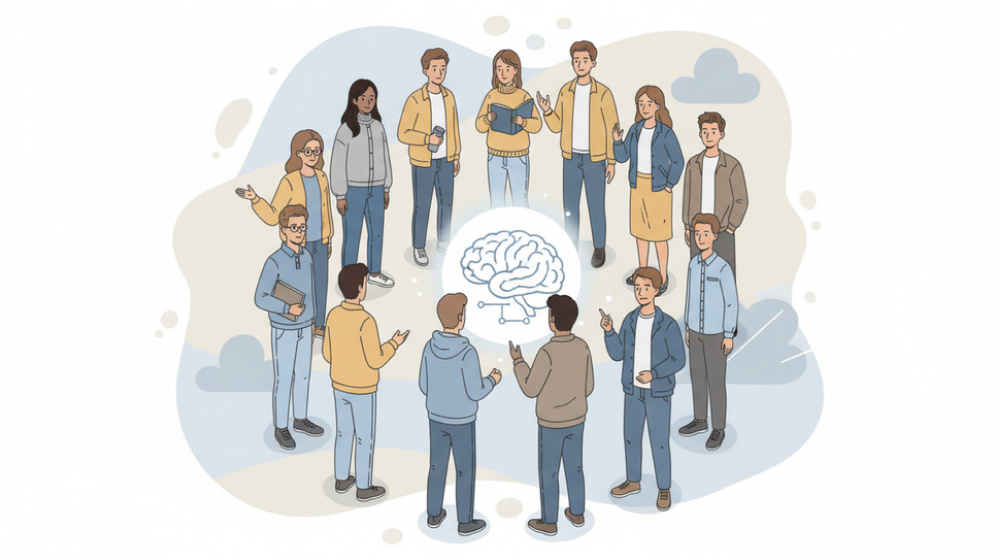
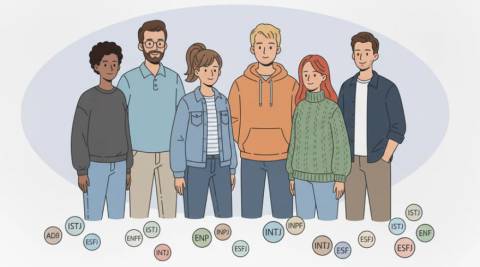
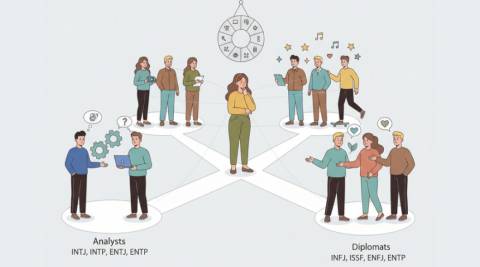
People are naturally curious about why colleagues collaborate differently, why friends recharge in distinct ways, and why some decisions feel effortless while others feel draining. In response to that curiosity, a well-known typology organizes behavioral preferences into mirrored pairs, producing a mapped set of sixteen patterns that many find memorable and practical. In work, school, and personal life, this shared map can make complex interpersonal dynamics more approachable and less emotionally charged.

Across popular culture and workplace development, the framework called 16 personalities often serves as a shared language for understanding differences without reducing people to stereotypes. The rise of digital tools has widened access, and design innovations have made the learning curve less intimidating for newcomers while still inviting deeper exploration for enthusiasts. Across articles, workshops, and apps, explanations of energy, information processing, decision styles, and lifestyle orientation help readers connect patterns they already observe with vocabulary they can apply.
Enthusiasts also value the model because it encourages reflection instead of prescription, inviting people to explore strengths and blind spots with nuance. Across popular platforms, the approachable 16 personalities test introduces newcomers to type ideas without heavy jargon, and it offers a gentle entry point into the broader landscape of personality theory. Over time, many learners move from a quick label to richer insights about communication, feedback, and collaboration.
How the Test Process Works and What to Expect
For career mapping, the widely recognized 16 personality test offers a quick snapshot of preference patterns for reflection, not a verdict on potential. If you are comparing providers, the label MBTI test 16 personalities is often used online to signal a similar style of questionnaire that blends accessible language with a structured scoring approach. Effective reports usually include descriptions of communication style, work environment needs, and common development pitfalls so that the insights translate into action. Organizations adopt typology tools to accelerate mutual understanding, reduce preventable friction, and help teams plan work in ways that fit diverse strengths. Individuals use the same vocabulary to articulate needs around focus time, feedback style, and decision speed so that expectations become explicit rather than guessed. Across roles, the payoff shows up as fewer misunderstandings and more intentional collaboration rituals.
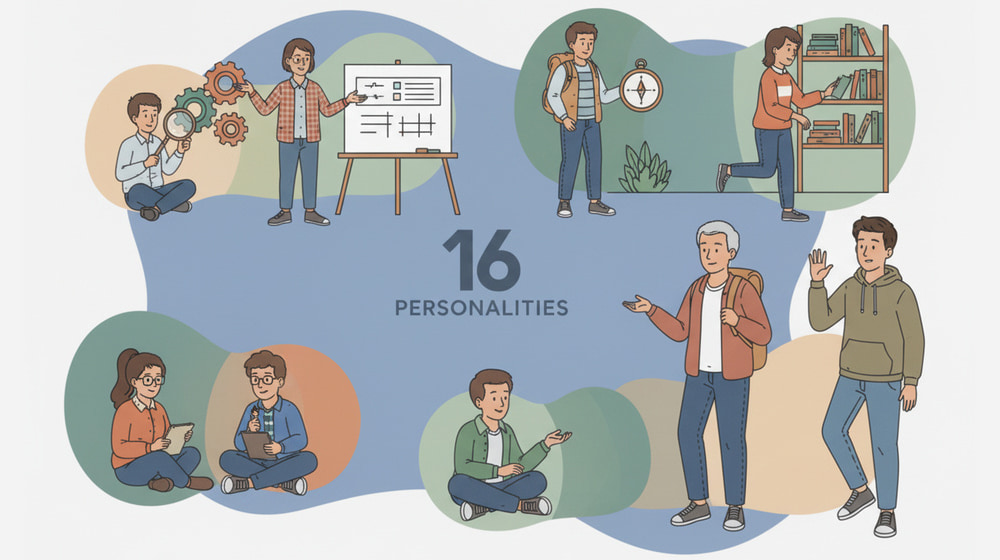
After completing a questionnaire, the narrative in your 16 personalities test results should be treated as hypotheses rather than hard labels, giving you permission to experiment and adjust. For self-development programs, a structured 16 personality type test can serve as a repeatable baseline to track evolving habits as you practice new behaviors on projects, at home, and in community roles. Pairing type insights with habit tracking, peer feedback, and goal reviews tends to produce the most durable gains.
How the 16 Personalities Patterns Work in Daily Life
The engine behind the model is a set of paired preferences that describe how people direct energy, process information, make decisions, and approach structure. Each pair functions like a compass needle leaning toward one pole, with capacity to use the opposite pole when circumstances demand. When combined, the four selections form a concise pattern that can be studied, tested in experience, and refined over time.
| Preference Pair | Focus | Typical Questions |
|---|---|---|
| Extraversion, Introversion | Energy direction | Where do you recharge and gather momentum most easily? |
| Sensing, Intuition | Information intake | Do you favor concrete data or patterns and possibilities? |
| Thinking, Feeling | Decision criteria | Do you prioritize impersonal logic or human impact first? |
| Judging, Perceiving | Lifestyle orientation | Do you prefer planned structure or adaptive spontaneity? |
Within type communities, the shorthand MBTI 16 personalities generally points to a four-dichotomy approach rooted in preference theory and expressed through recognizable day-to-day behaviors. In historical overviews, the phrase Myers-Briggs test 16 personalities often appears when authors trace how the framework reached mainstream audiences via books, workshops, and digital tools. Recognizing these pairs in yourself and others helps you predict friction points, craft complementary partnerships, and design workflows that reduce unnecessary strain.
Small Changes, Big Impact
Insight matters most when it changes conversations, calendars, and collaboration habits. The fastest wins often come from small adjustments: clarifying agendas, sequencing brainstorming before decision-making, or batching tasks that require different types of attention. Over time, these micro-changes create a culture where people feel seen, and projects move faster with fewer do-overs.
Making 16 Personalities Test Insights Actionable
When you want something light, a playful 16 personalities quiz can spark curiosity before a deeper dive into validated resources and practical toolkits. For social learning, a brief 16 personality quiz can kick off discussion in class or team workshops, and that dialogue frequently reveals nuanced preferences that a short survey alone might miss. Consider pairing results with peer interviews that ask, “What helps you do your best work?” and “What derails you most?” to make insights immediately actionable. Skillful leaders use type language as a bridge, not a box, linking personal clarity to team effectiveness and measurable outcomes.

For learners on a budget, many platforms advertise a free MBTI test online 16 personalities experience that includes basic guidance and lightweight summaries, which can be enough to start reflective conversations. Budget-conscious teams may pilot training using a 16 personalities test free resource before investing in advanced coaching or certification, provided they complement it with thoughtful facilitation. Whatever route you choose, prioritize ethical use: avoid hiring decisions based on type, respect privacy, and frame results as a shared vocabulary for experimenting with better ways of working.
Frequently Asked Questions
The Latest News
Please Note
This website (16-personalities-quiz.net) is not an official representative, creator or developer of this application, game, or product. All the copyrighted materials belong to their respective owners. All the content on this website is used for educational and informative purposes only.