Discover Your Type With the 16 Personalities Test Online
What the Test Is and Why It Captivates So Many People
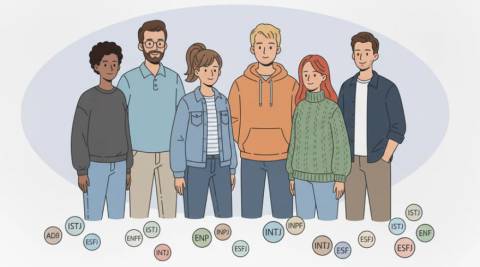
The Myers-Briggs approach offers a structured way to reflect on how you gather information, make decisions, and prefer to live your life. Built on Carl Jung’s typological ideas, it organizes preferences into 16 distinct patterns, often called “types.” Rather than prescribing who you should be, it provides language for strengths, stressors, and blind spots. People return to it repeatedly because the framework feels intuitive, memorable, and easy to discuss in everyday situations, from career choices to communication at home or in the workplace.
As a self-report inventory, it relies on your honest answers and your best sense of how you act most naturally. Many find that the Myers-Briggs test 16 personalities lens helps them move past vague self-help advice toward more targeted growth strategies. The appeal comes from its balanced mix of accessible categories and nuanced interpretation. Even without becoming a typology expert, you can quickly recognize patterns in how you respond under pressure, recharge your energy, or collaborate with different kinds of thinkers.
Adoption has spread worldwide through coaching, education, leadership development, and personal growth communities. In those contexts, the 16 personalities test Myers-Briggs phrasing often serves as shorthand for programs that teach better communication, conflict resolution, and strengths-based teamwork. Used thoughtfully, the framework can spark curiosity rather than stereotypes and can inspire respectful dialogue about differences. When you treat it as a mirror rather than a mold, it becomes a springboard for learning with others.
The Four Preference Pairs and How They Combine Into Sixteen Types
At the heart of the model are four preference pairs: Extraversion–Introversion, Sensing–Intuition, Thinking–Feeling, and Judging–Perceiving. Each pair describes a natural inclination rather than a fixed rule, and everyone uses both sides at times. The combination of those four choices creates sixteen commonly referenced patterns that describe how people like to focus attention, process data, evaluate options, and organize their lives. Understanding these pairs is like learning a map; the more familiar you are with the landmarks, the easier it becomes to navigate everyday decisions.
Extraversion and Introversion describe where energy tends to flow, while Sensing and Intuition outline how information is preferred. Within that structure, the 16 personality test Myers-Briggs language helps people put words to instincts they have felt for years. Thinking and Feeling show how you prioritize logic or values when deciding, and Judging and Perceiving highlight your approach to structure or spontaneity. None of these are moral judgments; they are simply patterns that can be honed and balanced.
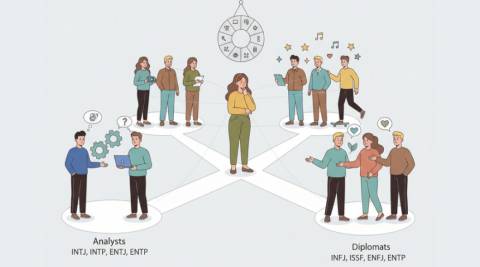
Because the system yields sixteen patterns, you will meet people who look similar on the surface but diverge in subtle ways. That is one reason the Myers-Briggs 16 personality test remains compelling for teams that want a shared vocabulary without oversimplifying human behavior. When colleagues learn these distinctions, meetings become more productive, feedback lands more gracefully, and collaboration feels more natural. Over time, individuals discover complementary partners who offset blind spots and accelerate growth.
- Extraversion vs. Introversion: energy direction and social recharge
- Sensing vs. Intuition: detail focus vs. pattern recognition
- Thinking vs. Feeling: logic emphasis vs. values emphasis
- Judging vs. Perceiving: structure preference vs. flexibility preference
Real-World Benefits: Career Clarity, Stronger Teams, and Better Communication
Organizations use the framework to reveal how different people tackle problems, share information, and plan projects. For example, some thrive in roles requiring rapid iteration and ideation, while others excel when expectations are defined and timelines are crisp. Managers can distribute responsibilities in ways that maximize energy and reduce friction. The result is a culture where unique contributions are recognized and leveraged. Beyond work, families and friends find healthier routines by aligning plans with individual rhythms and needs.
In career exploration, a shared language accelerates mentorship and self-advocacy. When people can explain their preferences, mentors can tailor guidance, and job seekers can highlight authentic strengths. Many guidance counselors present group workshops where the Myers-Briggs 16 personalities test vocabulary gives students a relatable starting point for reflection. That shared baseline makes it easier to discuss how you prefer to brainstorm, what drains you, and which environments let you flourish.
Plenty of newcomers begin with online questionnaires and then dive deeper through coaching or reading. For those sampling the terrain, some providers offer introductory options similar to the Myers-Briggs 16 personalities test free idea, paired with articles and exercises that encourage thoughtful interpretation. Regardless of how you start, the key is to treat any result as a hypothesis to be tested against lived experience, not as a label to hide behind.
| Work Scenario | What Often Helps | Why It Works |
| Brainstorming new products | Mix visionaries with detail checkers | Balances imaginative leaps with practical feasibility |
| Project planning | Define milestones and decision points | Creates clarity for structure lovers while preserving agility |
| One-on-one feedback | Offer both data and personal impact | Respects logical and values-oriented perspectives |
| Remote collaboration | Blend synchronous and asynchronous methods | Supports varied energy patterns and communication styles |
How to Take a Questionnaire and Interpret Results Responsibly
Approach any personality inventory with a reflective mindset. Choose a calm moment, answer based on your natural tendencies, and avoid overthinking edge cases. If you imagine how you behave at your best and under stress, you will notice patterns that reappear across contexts. After receiving a result, spend time reading descriptions and asking, “What fits, what doesn’t, and what nuance is missing?” Personal notes about times you felt energized or drained will enrich your understanding.
Context matters because roles, cultures, and life stages influence expression. Many professionals compare insights from multiple tools to triangulate strengths and development areas, and some find that the Myers-Briggs personality test 16 personality framework complements values assessments or strengths inventories. Talking with a coach can help you separate stable preferences from skills you have developed out of necessity, so your growth plan remains both realistic and ambitious.
Above all, use your results as a compass, not a cage. Share insights with teammates so expectations and workflows can be adjusted thoughtfully, and revisit your notes after major life changes. When discussing options with peers, some will reference summaries popularized as the myer briggs test 16 personalities phrasing, which can be a convenient entry point to richer conversations. Over time, you will refine language that fits you precisely, which is the real value of any reflective practice.
- Answer authentically, not aspirationally
- Record examples that confirm or challenge your result
- Translate insights into daily habits and routines
- Review with trusted peers for real-world calibration
Myths, Limits, and Evidence-Informed Best Practices
Despite its popularity, any typology can be misused. The most common mistakes are treating types as boxes, assuming stability across all contexts, or using labels to avoid accountability. Good practice emphasizes preferences, not capabilities, and encourages skill-building across the spectrum. You can value structure while developing flexibility, or prefer brainstorming while mastering detailed execution. Nuance matters, and thoughtful application always beats rigid categorization.
Another misconception is that short quizzes alone can define you. While quick formats feel approachable, they should feed a deeper process of reflection and dialogue, and this is where something like a Myers-Briggs 16 personalities quiz should be seen as a starting point rather than a final verdict. Combining data with stories from your actual work and relationships helps you pinpoint strengths and growth edges with far more accuracy.
Finally, price and access can confuse newcomers who are unsure where to begin. Free introductions can be useful if paired with responsible guidance, and many learners first encounter the topic via phrases such as 16 personality types Myers-Briggs test free before seeking more robust materials. The best results come when you pair any questionnaire with coaching, reading, and real-life experiments that translate insights into measurable behavior change.
- Myth: “Type predicts success.” Reality: habits, effort, and context matter more.
- Myth: “People never change.” Reality: preferences are stable, skills evolve.
- Myth: “Labels excuse behavior.” Reality: awareness increases responsibility.
FAQ: Common Questions About the 16-Type Approach
Is this a test of ability or intelligence?
No, it focuses on preferences, not aptitude. You can absolutely learn to operate outside your comfort zone when a situation demands it. Many people use it like a mirror to understand energy patterns and decision styles more clearly. For newcomers exploring entry points, it is common to hear about the 16 personality test free Myers-Briggs idea as an approachable way to start reflecting before deeper study.
Can my result change over time?
Your core preferences tend to be relatively stable, but how they show up can shift with experience, roles, and context. Stress, culture, and training can also influence how you answer. That is why it is wise to revisit descriptions periodically and refine your understanding as your life evolves.
How accurate are online questionnaires?
Accuracy depends on question quality and your honesty when responding. Short formats provide a snapshot, while longer processes with feedback deliver richer nuance and better reliability. Some users choose to complement online tools with coaching conversations and reflective exercises for a fuller picture.
What should I do after getting a result?
Translate insights into action: adjust your calendar, redesign your workspace, and align tasks with natural strengths. Share preferences with teammates to improve collaboration and reduce friction. When budgeting for learning resources, some people consider options akin to the Myers-Briggs 16 personality test free path before investing in more comprehensive programs or workshops.
Is it okay to use this for hiring decisions?
Best practice is to avoid using typology results for hiring or promotion decisions. The framework was designed for development, not selection. Instead, use validated job-relevant assessments and structured interviews, and keep personality insights for coaching, team building, and professional growth.